professor-curious-logo

AP Lang 5 Blueprint

Curated by Arpit

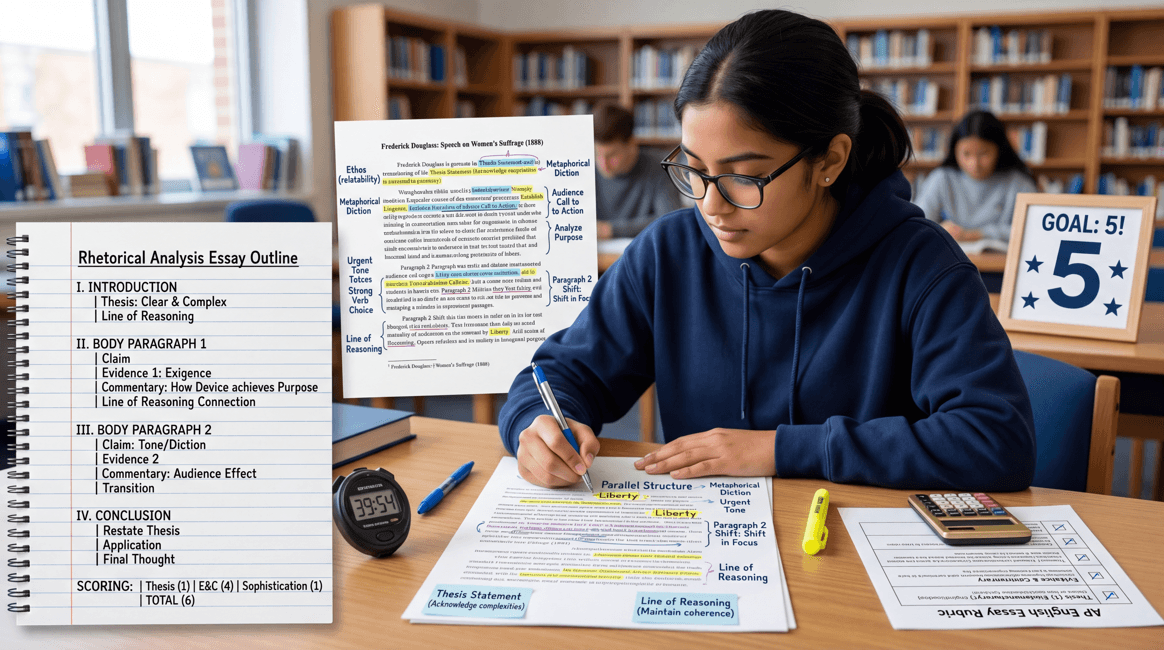
If the rhetorical analysis essay feels like the make-or-break part of AP Lang, this guide is your shortcut to writing with confidence under pressure. Instead of guessing what graders want, you will learn exactly how to match the AP Lang rubric, build a defensible thesis, and turn evidence into strong commentary that earns points. This article breaks the essay into a repeatable system students can actually use on test day, including:

  • What each rubric row really rewards
  • A fast structure for intro, body paragraphs, and conclusion
  • Sentence templates for analysis, commentary, and sophistication
  • Common mistakes that keep essays stuck in the mid-score range By the end, you will have a clear blueprint for moving from "I kind of get it" to "I can write this in 40 minutes and score high."

Frequently Asked Questions

The AP Lang rhetorical analysis essay is scored on a 6-point rubric with 1 point for thesis, up to 4 points for evidence and commentary, and 1 point for sophistication. Thesis must be defensible, evidence must be specific textual detail, commentary must explain rhetorical choices, and sophistication rewards nuance or complexity — not fancy vocabulary.

A defensible thesis is an arguable claim about the author's rhetorical choices and purpose that a reasonable reader could disagree with — not a summary or a restatement of the prompt. It should name the writer's choice (tone, structure, appeals, imagery) and link it to purpose or effect on the audience, usually in one sharp sentence.

A defensible thesis is an arguable claim about the author's rhetorical choices and purpose that a reasonable reader could disagree with — not a summary or a restatement of the prompt. It should name the writer's choice (tone, structure, appeals, imagery) and link it to purpose or effect on the audience, usually in one sharp sentence.

Strong AP Lang commentary explains how a specific rhetorical choice creates a specific effect that advances the author's purpose. Skip plot summary and vague labels like 'this is effective.' Instead, move from quote → choice → effect → purpose, and connect multiple pieces of evidence so they build one line of reasoning, not a list.

Strong AP Lang commentary explains how a specific rhetorical choice creates a specific effect that advances the author's purpose. Skip plot summary and vague labels like 'this is effective.' Instead, move from quote → choice → effect → purpose, and connect multiple pieces of evidence so they build one line of reasoning, not a list.

A reliable template: 1-sentence contextual intro + defensible thesis; 2-3 body paragraphs each built as topic sentence → evidence → choice → effect → purpose; short conclusion that lifts to sophistication (complexity, tension, or audience). Aim for ~40 minutes per essay, with 5 minutes of planning up front to lock in the thesis and the choices you will actually analyse.

A reliable template: 1-sentence contextual intro + defensible thesis; 2-3 body paragraphs each built as topic sentence → evidence → choice → effect → purpose; short conclusion that lifts to sophistication (complexity, tension, or audience). Aim for ~40 minutes per essay, with 5 minutes of planning up front to lock in the thesis and the choices you will actually analyse.

The sophistication point rewards nuance, not big words. You can earn it by identifying tensions or complexities in the text, situating the passage in a broader rhetorical or historical context, analysing how different choices interact, or using a consistently vivid and precise style throughout. One clear example of sophisticated thinking is enough — graders are looking for quality over quantity.

The sophistication point rewards nuance, not big words. You can earn it by identifying tensions or complexities in the text, situating the passage in a broader rhetorical or historical context, analysing how different choices interact, or using a consistently vivid and precise style throughout. One clear example of sophisticated thinking is enough — graders are looking for quality over quantity.

Rhetorical analysis asks how a writer uses choices to achieve a purpose for an audience. Argument asks you to defend, challenge, or qualify a claim using your own evidence. Synthesis asks you to enter a conversation by integrating at least three of the provided sources into your own argument. All three use the same 6-point rubric but reward different skills.

Rhetorical analysis asks how a writer uses choices to achieve a purpose for an audience. Argument asks you to defend, challenge, or qualify a claim using your own evidence. Synthesis asks you to enter a conversation by integrating at least three of the provided sources into your own argument. All three use the same 6-point rubric but reward different skills.

Aim for at least 3-4 specific pieces of evidence across the essay, with quotes kept short and embedded inside your own sentences. Graders care more about the quality of analysis than the number of quotes, so using two well-analysed lines beats sprinkling five quotes with weak commentary. Always explain rhetorical choice and effect after each piece of evidence.

Aim for at least 3-4 specific pieces of evidence across the essay, with quotes kept short and embedded inside your own sentences. Graders care more about the quality of analysis than the number of quotes, so using two well-analysed lines beats sprinkling five quotes with weak commentary. Always explain rhetorical choice and effect after each piece of evidence.

Focus on three high-ROI habits: drill thesis statements from past FRQ prompts until you can write one in under two minutes, practise timed rhetorical analysis essays against released scoring samples, and review the 6-point rubric so every paragraph you write targets a specific row. Combine with regular reading of high-quality nonfiction to sharpen your ear for rhetorical moves.

Focus on three high-ROI habits: drill thesis statements from past FRQ prompts until you can write one in under two minutes, practise timed rhetorical analysis essays against released scoring samples, and review the 6-point rubric so every paragraph you write targets a specific row. Combine with regular reading of high-quality nonfiction to sharpen your ear for rhetorical moves.